




Decarb Summits had built something that takes most organizations years to earn: a room full of the right people. Senior executives from real estate, healthcare, data centers, higher education, renewable energy, and government were showing up and coming back. In a space as crowded as climate and decarbonization, that kind of credibility is a real business advantage. The platform had momentum that the business infrastructure hadn't managed to catch up to.
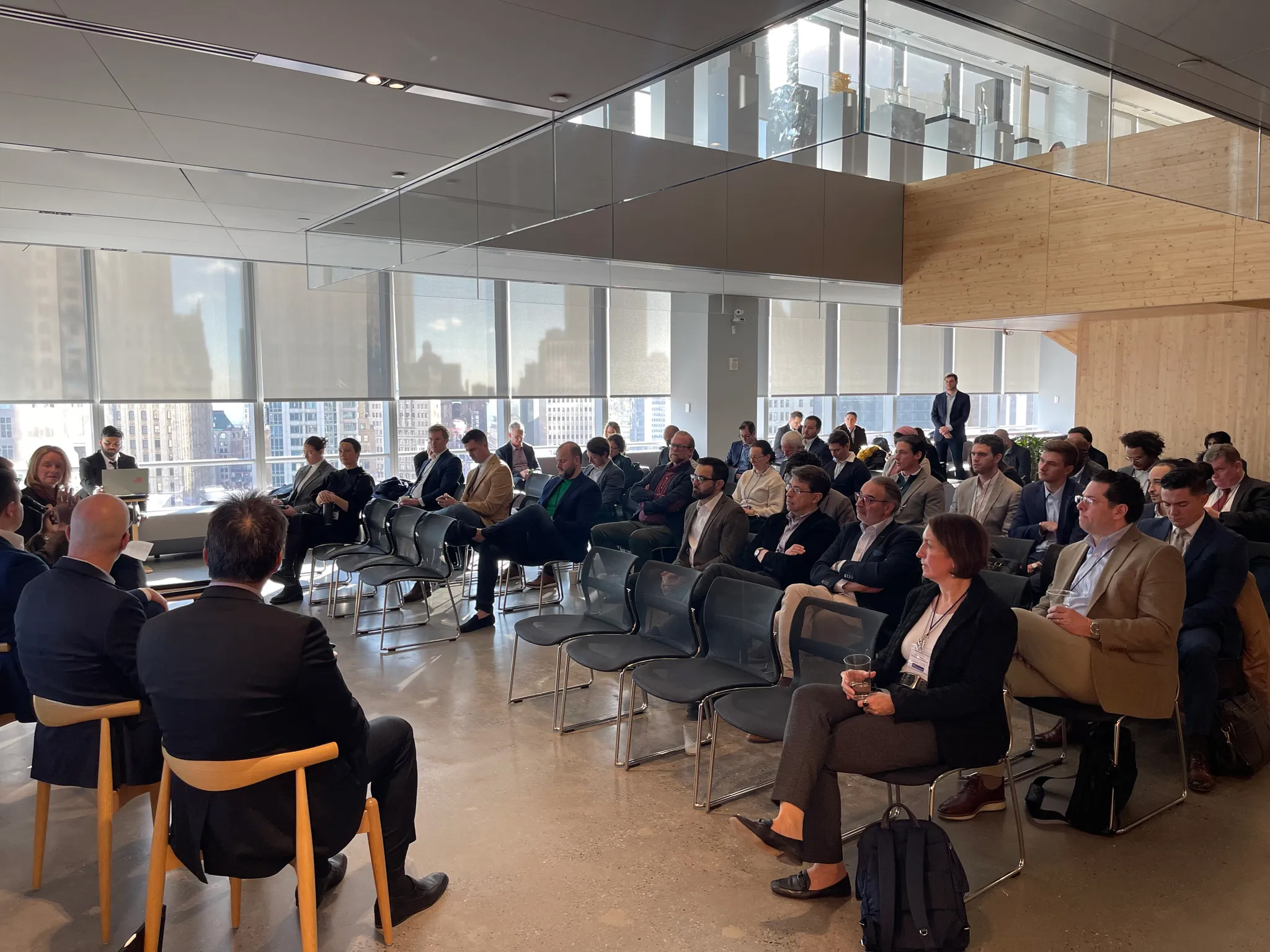
Inquill didn't come in as an agency; we acted as a strategic partner, a fully integrated part of the team. Inquill was embedded directly into the day-to-day operations of the business: present in internal communications, sitting in on strategic decisions, taking ownership of workstreams that would normally require multiple specialized hires.
To offset some of the upfront costs for this level of work, we agreed to take part of our compensation as a share of revenue, making us fully aligned with Decarb’s management. Every decision ran through the same question: Does this move the business forward?
Before any system could be rebuilt or any sales process defined, Decarb Summits needed a brand that could hold up under scrutiny. The existing visual identity and messaging was rough and had accumulated organically over the years. The website no longer reflected the scale or seriousness of the network it was engaging. Prospects who didn't already know Decarb Summits couldn't easily read what it was or whether it belonged in their outreach arsenal. At this level, that ambiguity was costing Decarb Summits sales.
We led a full brand refresh from the ground up: new visual identity, consistent messaging, design standards applied across every touchpoint. A prospect encountering Decarb Summits on LinkedIn, in their inbox, or on the website would now find the same brand experience each time. That consistency was the foundation the sales process needed before anything else could be built on top of it.
The most consequential work happened before any marketing asset was built or any system was touched. It was in how Decarb Summits thought about and sold its core offering. When Inquill came on board, membership didn't have tiers in any formal sense. Pricing was largely ad hoc, negotiated deal by deal based on what the founder knew about each prospect. That approach works on a small scale, but it breaks under pressure when you're trying to grow the business and empower a sales function to close deals without the founder on every call. Inquill worked with Decarb Summits leadership to define membership from scratch: what the tiers were, what each one included, and at what price.
The audience spans real estate, healthcare, data centers, higher education, renewable energy, and government. Each of those buyers comes in with different needs and different internal approval processes. The membership structure needed to speak to all of them without collapsing into a single generic pitch. Something a salesperson could hand over, and a finance team could easily understand and approve. Within months of the tiers going live, the sales team was closing deals much more easily and not wasting time on leads that were just fishing around, hoping to negotiate a better deal.
With a coherent brand in place, the next problem was making marketing do something useful. Decarb Summits had events, speakers, genuine content. What it lacked was a system that connected any of it to sales. A weekly LinkedIn newsletter gave the platform a regular, owned channel to reach its target audience without relying on algorithmic reach or paid distribution. It kept Decarb Summits visible and credible in the feeds of the senior decision-makers they were trying to attract and retain as members.
Sales enablement materials (one-pagers, membership overviews, positioning documents) gave the sales function something to work with beyond a verbal pitch. Professionally produced assets that could be sent before a call or left behind as a reference. These may seem small, but their repeated use significantly freed up the sales team to prospect instead of building proposals over and over again.
Speaker Marketing Kits were one of the more effective pieces of the system. After each summit, every speaker received a professionally designed kit of content they could share with their own networks: recaps, graphics, highlights. Executives at this level have audiences that trust them. By making it effortless for speakers to share, Decarb Summits extended its reach through peer recommendation, which is by far the most credible distribution channel available, without asking busy people to create anything themselves.
Inquill also built an SEO and content strategy to ensure the platform was building discoverability over time, not just generating activity around events. The result was a marketing function running on a predictable weekly cadence, feeding the sales process continuously instead of going quiet between summits.
Generating interest with this level of speakers was the easy part; the harder part was Decarb Summits lacked the infrastructure to properly engage with that interest. When we arrived, the sales process lived in email threads and Excel files. Tools that had once been part of the stack had become so disconnected the team had abandoned them. Leads weren't tracked, follow-ups depended on memory, and there was no way to look at the business and understand where everything stood.
We built a custom CRM from the ground up, migrated the existing data from dozens of tools and folders into it, and built the process around it: structured pipelines, automated follow-up sequences, and account management workflows. For the first time, sales conversations had a home that wasn't someone's inbox. The rebuild also exposed how bloated the tech stack had become. Inquill cut redundant and underused tools, reducing annual technology costs by over $15,000. What remained was lean enough for a small team to run and structured enough that it actually got used.
.jpg)
When Inquill came on board, Decarb Summits operated on a sponsorship-led model. Although individual summit tickets were sold, it was not structured as a revenue stream, nor promoted consistently. The entire business model revolved around big-ticket sponsorships and long-term membership packages, and complementary revenue streams were underutilized.
Throughout the project, we helped Decarb Summits identify and design new offerings and value levers for members, structure and promote individual ticket sales as an independent revenue stream. This brought a deeper understanding of members' needs and interests and created a clear pathway for members who wanted to have taster before committing to an annual membership, in the end reducing the amount of comped tickets and boosting per summit revenue.
Sponsorship and membership remained central to the business, but the organization stopped leaving money on the table in a category it had previously treated as a cost. By the end of the engagement, ticket revenue had grown to more than fourteen times what it was at the start of the year.
Before the Inquill team came on board, the Decarb Summits team was spending energy on problems that shouldn't have required their attention. Chasing down leads in inboxes. Explaining membership from scratch on every call. The summits organized by Decarb were always top-tier, but the underlying business infrastructure was cracking at the seams.
By the end of the engagement, that operational gap was closed. Sales could focus on selling. Marketing moved on a cadence that didn't require constant intervention. The brand standards we built meant that every new piece of content, outreach email, and event asset came out looking like it belonged to the same organization. And that organization looked like what Decarb Summits actually was: a serious brand platforming some of the biggest names in decarbonization. Once the standard was set, maintaining it became easy. The team had a system they could run, a product they could explain, and a brand that did some of the selling before anyone picked up the phone.
.jpg)
The numbers reflected it: 20+ new members, $15,000+ in annual cost savings from a rationalized tech stack, 174% growth in LinkedIn reach among target audiences, and 14x ticket revenue compared to the start of our work. Ultimately, we put Decarb Summits back on solid footing with the infrastructure to keep growing with a lean team.
If you lead marketing at a B2B organization in the climate or sustainability space, you'll probably recognize the gap between what your platform delivers and what your marketing communicates about it. That gap is costing you revenue in lost deals and hours in inefficient, repetitive work. We built Inquill specifically to close those gaps. If you feel you aren’t getting the most out of your marketing efforts, drop us a line to see how we can help you move your bottom line, just like we did for Decarb Summits.

.svg)
.svg)

.svg)
.svg)
